

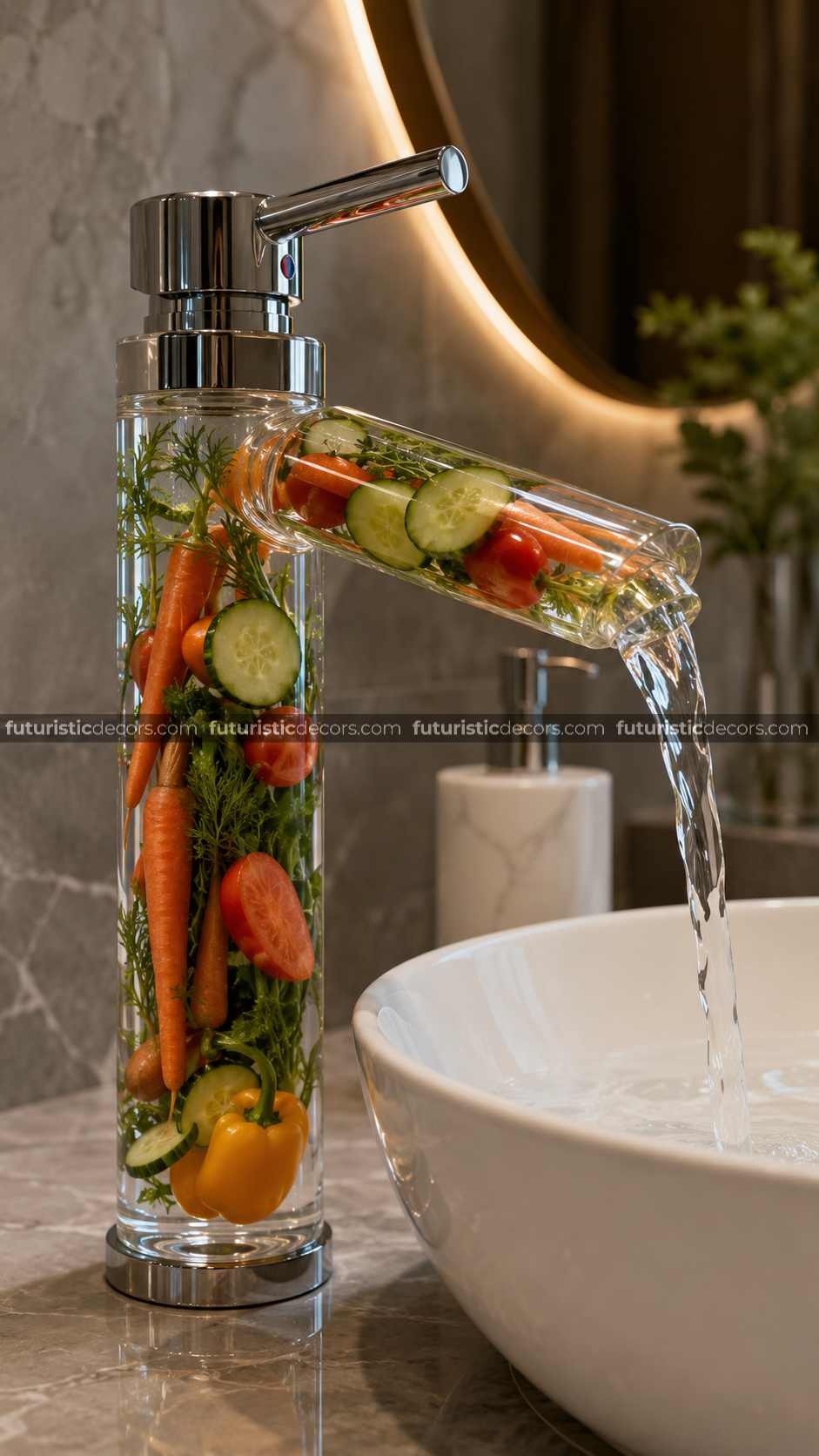
The glass faucet with vegetables inside is one of the most eye-catching kitchen and bathroom fixtures to appear in recent years. At first glance it looks like a normal modern faucet, but the clear glass body is packed with colorful fresh vegetables floating in water.
Cherry tomatoes, cucumber slices, broccoli florets, carrots, herbs, and yellow peppers sit inside the transparent column and spout while clean water flows out as usual. This review looks at real-world performance, design quality, cleaning needs, and whether the novelty is worth the price.
What Exactly Is a Glass Faucet with Vegetables Inside?
A glass faucet with vegetables inside combines a standard single-handle or dual-control mixer with a thick-walled borosilicate or acrylic glass reservoir. The glass section is filled with water and real or high-quality artificial vegetables. The water path is completely separate from the vegetable chamber, so the produce never touches the drinking or washing water. The result is a functional faucet that also acts as a living decorative piece.
Key visible features across the models shown:
- Tall cylindrical glass body
- Curved or arched glass spout that continues the vegetable display
- Chrome, brushed nickel, or rose-gold metal finishes
- Single-lever temperature and flow control
- Standard 3/8-inch or 1/2-inch water connections
Design and Visual Impact
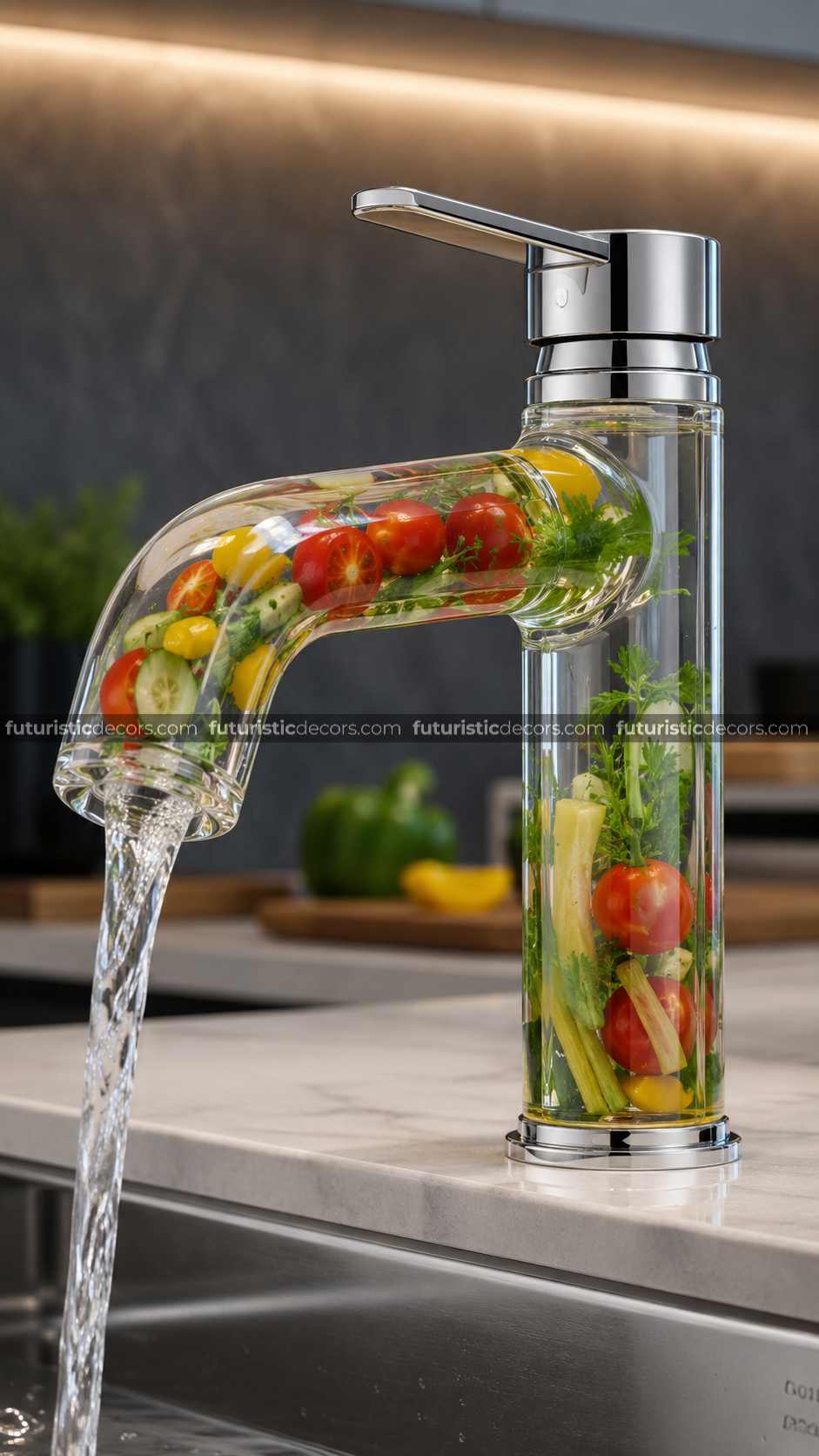
The strongest selling point of any glass faucet with vegetables inside is pure visual drama. In a modern kitchen with white marble counters or a bathroom with soft lighting, the colorful vegetables create an instant focal point. Red tomatoes, green cucumbers, orange carrots, and yellow peppers catch the light and look almost edible.
Different configurations exist:
- Straight vertical body with side spout
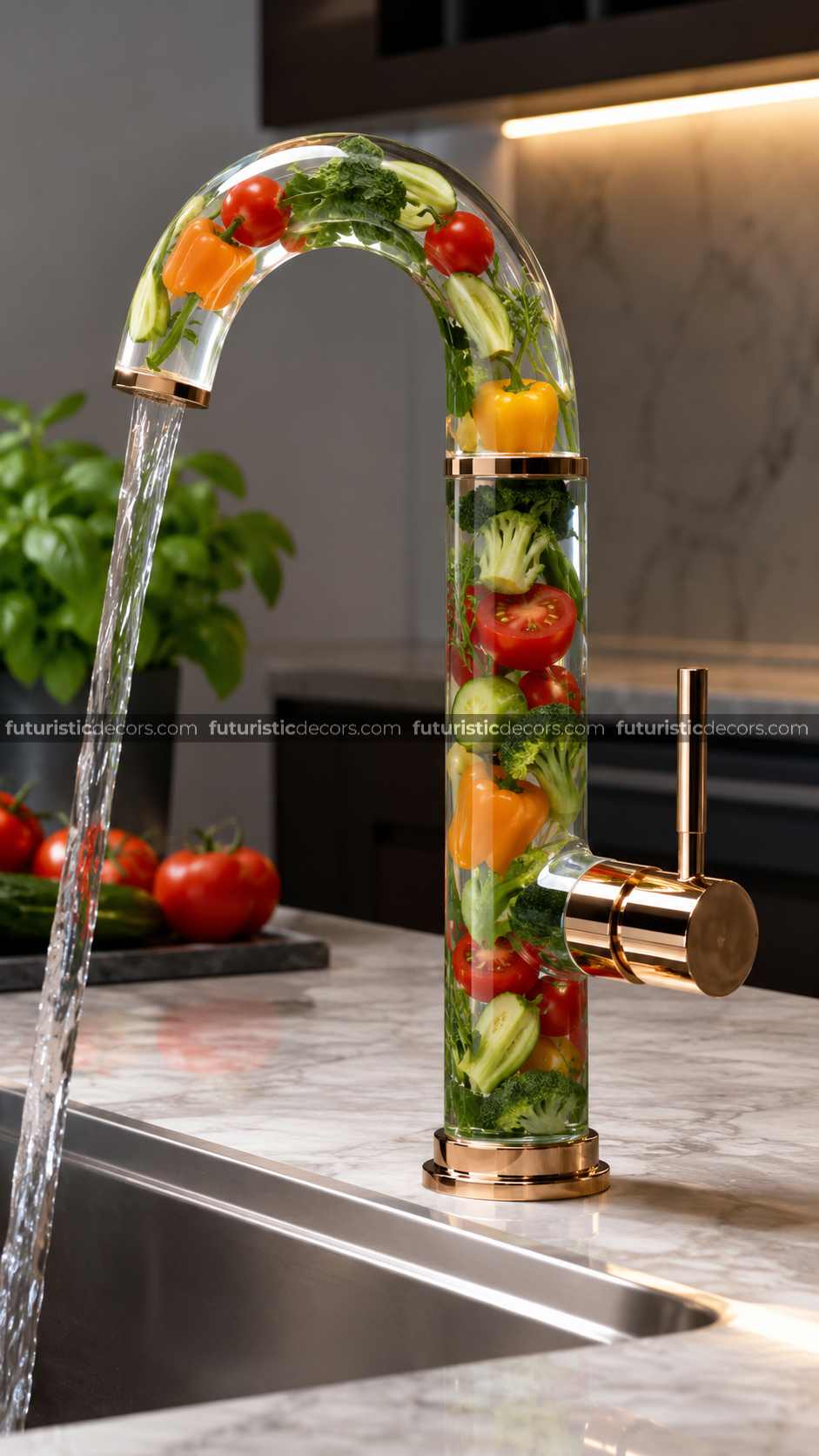
- High-arch gooseneck style
- Lower profile models suited for bathroom vanities
The glass is thick enough to feel solid. Metal parts are polished and match high-end faucet lines. When water runs, the movement of light through the glass and the slight shifting of the vegetables add motion that static decor cannot match.
Glass Faucet with Vegetables Inside: Build Quality & Materials
Most versions use:
- Thick tempered or borosilicate glass for the main body and spout
- Solid brass or stainless-steel valve cartridge
- Chrome, PVD rose-gold, or matte black finish on metal components
- Ceramic disc cartridge for drip-free operation
The glass must be properly sealed. Better units use food-grade silicone gaskets and pressure-tested joints so the vegetable chamber stays watertight and separate from the water line. Cheaper copies sometimes develop micro-leaks after months of temperature changes. Looking for units that clearly state the glass is tempered and the seals are replaceable is worth the extra cost.
Installation Experience
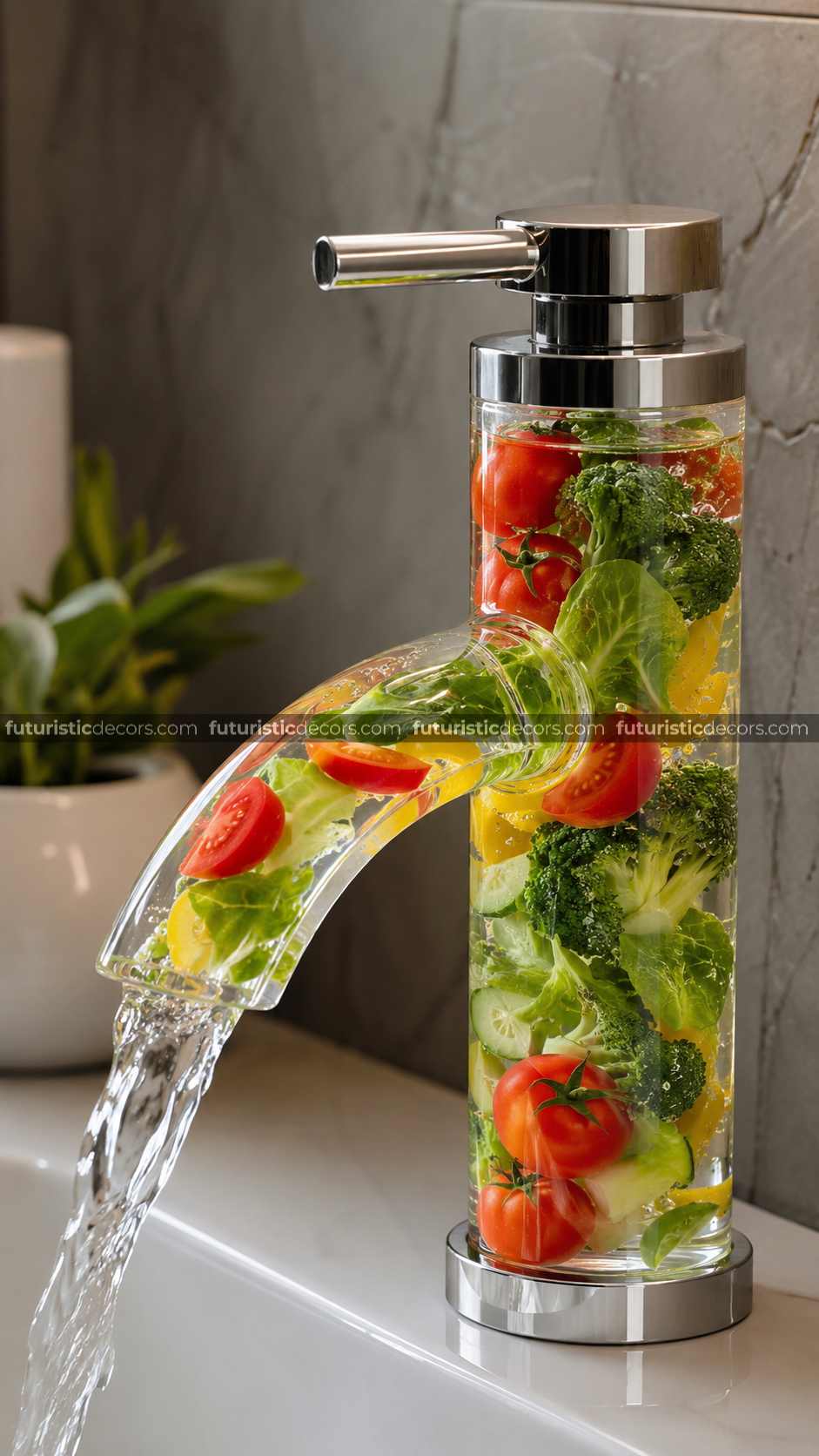
Installing a glass faucet with vegetables inside follows the same basic process as any standard single-hole deck-mount faucet, but the taller and heavier glass body requires a bit more care.
- Begin by turning off both the hot and cold water supply valves under the sink.
- Open the existing faucet to relieve any remaining pressure in the lines.
- Disconnect the supply hoses and remove the old faucet completely.
- Thoroughly clean the sink hole and surrounding countertop area so the new base sits evenly.
- Carefully lower the glass faucet with vegetables inside through the mounting hole, making sure the glass section does not bump against the counter edge.
- From underneath the sink, slide on the rubber gasket and mounting nut, then tighten firmly by hand before using a basin wrench for the final turns.
- If the countertop is thin or the faucet feels top-heavy, install the optional stabilizer plate that many models include.
- Attach the new hot and cold supply lines, ensuring the connections are snug but not over-tightened.
- Slowly turn the water supply back on and inspect every joint and the base for leaks.
- Run both hot and cold water for a full minute to flush the lines and confirm smooth flow and temperature control.
Find related products to buy: Click here
Water Flow and Everyday Performance
Flow rate on most of these faucets sits between 1.5 and 2.2 gallons per minute, which is standard for modern kitchen and bathroom fixtures. The aerator produces a smooth, splash-free stream. Temperature response is quick thanks to ceramic cartridges. There is no noticeable difference in water pressure compared with a regular faucet of the same size.
The vegetable chamber has zero effect on water quality. The produce sits in a closed, sealed section. Only the metal valve and spout path carry the water that comes out of the faucet.
Cleaning and Maintenance Reality
This is the biggest practical consideration. A glass faucet with vegetables inside requires more attention than a solid metal faucet.
Daily or weekly tasks:
- Wipe the exterior glass with a soft cloth and mild glass cleaner
- Check for mineral spots around the base and spout tip
Every 4–8 weeks (depending on water hardness and how realistic the vegetables look):
- Shut off water
- Carefully empty or replace the vegetable fill if real produce is used
- Rinse the glass chamber thoroughly
- Refill with fresh water and new vegetables or high-quality replicas
Using artificial vegetables made of food-grade silicone or acrylic eliminates rotting and mold risk. Many owners switch to permanent faux produce after the first month because real vegetables eventually cloud the water or break down. Soft-bristle brushes or bottle brushes help clean the inside curves of the spout section.
Hard water areas will show mineral deposits faster on the glass. A simple vinegar soak or citric acid solution keeps the glass crystal clear.
Durability Over Time: Glass Faucet with Vegetables Inside
Well-made units hold up for years if the glass is not struck by heavy pots or tools. The weak points are usually the seals between glass and metal parts. Temperature swings (very hot water followed by cold) can stress the joints. Choosing a model with replaceable O-rings and gaskets extends service life.
The metal finish on higher-end versions resists fingerprints and water spots better than budget chrome. Rose-gold and brushed finishes hide marks more effectively than high-polish chrome.
Who Benefits Most from This Faucet?
The glass faucet with vegetables inside works best for:
- Homeowners who want a conversation piece in an open-plan kitchen
- Content creators and anyone who photographs their space often
- People renovating a modern or maximalist bathroom
- Gift buyers looking for something unusual yet functional
It is less ideal for:
- Very small sinks where the tall glass body feels oversized
- Households with young children who might knock or climb on the fixture
- Anyone who prefers completely maintenance-free fixtures
Comparison with Standard Faucets
Style and visual appeal: The glass faucet with vegetables inside clearly wins. The transparent body filled with colorful vegetables creates a strong focal point that a plain metal faucet cannot match.
Cleaning effort: Standard metal faucets are simpler. The glass version needs occasional interior wiping or vegetable refreshes, while a regular faucet only requires exterior cleaning.
Durability: Both can last for years when well made. Standard faucets have fewer potential stress points, while the glass model depends more on the quality of its seals and glass thickness.
Installation: Nearly identical. Both use standard single-hole deck mounts and the same supply connections.
Water performance: No difference. Flow rate, temperature response, and splash control are the same when both use quality ceramic cartridges.
Maintenance cost over time: Standard faucets usually cost less to maintain. The glass version may need occasional seal replacements or new artificial vegetables.
Overall impression: Against other novelty faucets (animal shapes or LED models), the transparent vegetable design looks more refined and less toy-like while still delivering strong visual interest.
Pricing and Value
Street prices for a quality glass faucet with vegetables inside currently range from the mid-hundreds to just over a thousand dollars depending on finish, height, and whether real or artificial vegetables are included. Budget versions under $200 exist but often use thinner glass and less reliable cartridges. Spending more on a unit with solid brass internals and tempered glass usually pays off in longevity.
Glass Faucet with Vegetables Inside: Long-Term Ownership Notes
After six to twelve months most owners report the same pattern: the faucet still draws compliments every time someone visits, the water performance remains excellent, and the main ongoing task is occasional interior cleaning or vegetable refresh. Those who switch to permanent artificial produce report almost zero extra work beyond normal exterior wiping.
Discover comparable items here: Click here
Frequently Asked Questions
Does the water come in contact with the vegetables? No. The vegetable chamber is completely sealed and separate from the water path.
Can I use real vegetables? Yes, but they need regular replacement. Most long-term owners prefer high-quality artificial ones.
Is the glass strong enough for daily kitchen use? Tempered or borosilicate glass versions handle normal use well. Avoid heavy impacts.
Will it fit a standard sink hole? Yes. Most models are designed for the common single-hole 1-3/8 inch mounting.
How often do I need to clean the inside? With artificial vegetables, a deep clean every few months is usually enough. Real produce needs more frequent changes.
Are replacement parts available? Better brands offer replacement seals, aerators, and sometimes glass sections.
Does it work with pull-down or pull-out sprayers? Most current designs are fixed-spout. Pull-down versions are rare because of the glass construction.
Final Verdict: “Epoxy Vegetables Faucet Ideas for Modern Home Design”
The glass faucet with vegetables inside succeeds as both a working plumbing fixture and a piece of functional art. It delivers reliable water flow, solid construction when you choose a reputable version, and unmatched visual interest. The only real trade-off is the extra cleaning attention required to keep the glass and vegetables looking fresh. For anyone who enjoys unique design and does not mind a few minutes of occasional maintenance, it is an excellent and highly distinctive upgrade.
The glass faucet with vegetables inside remains a striking choice for anyone ready to add personality and color to an otherwise ordinary sink area. When purchased from a maker that prioritizes solid materials and proper sealing, it delivers both reliable function and lasting visual appeal.
If your priority is pure practicality and zero extra care, stick with a conventional metal faucet. If you want your sink to become the most photographed spot in the house, the glass faucet with vegetables inside is hard to beat.