
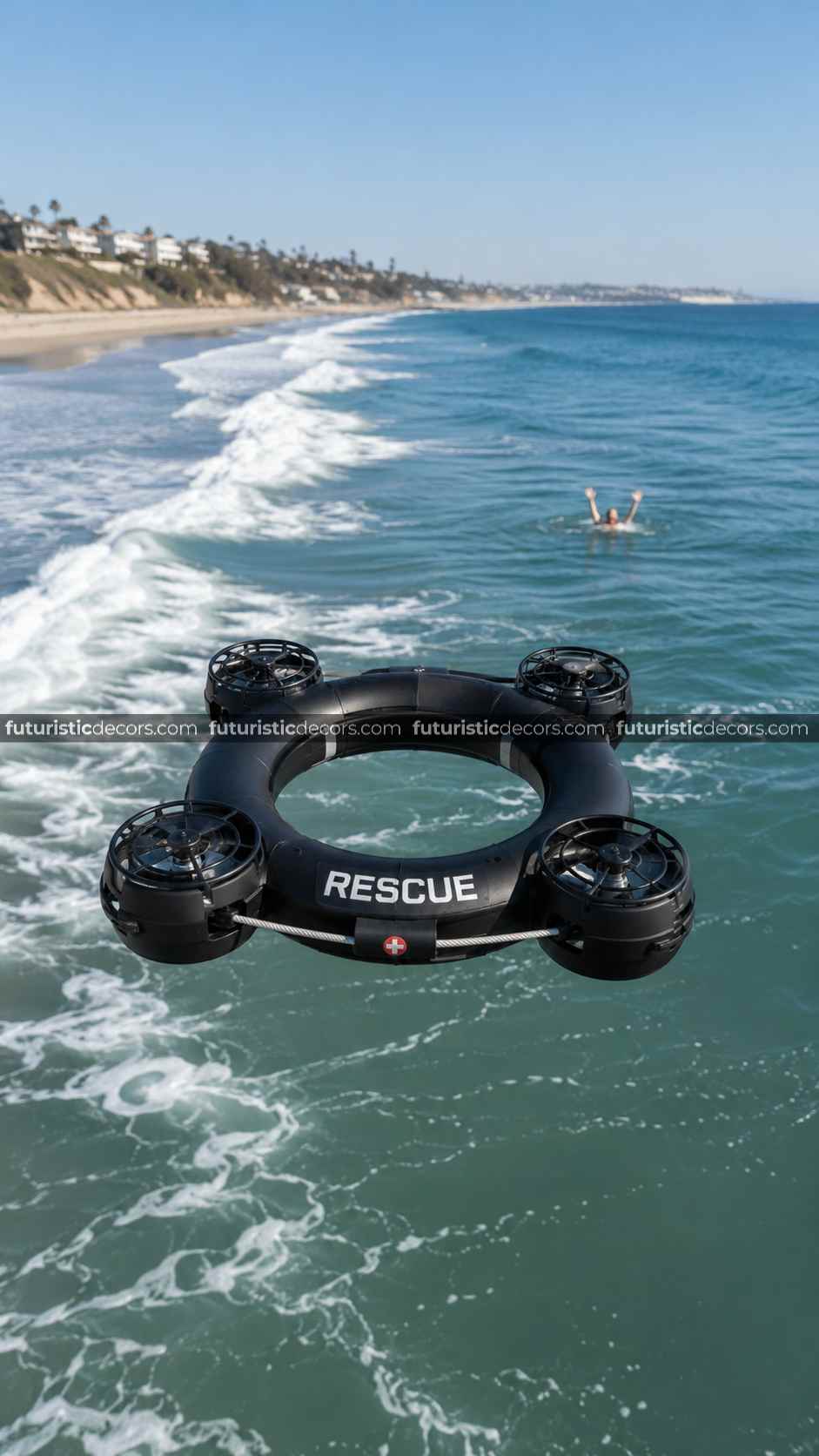
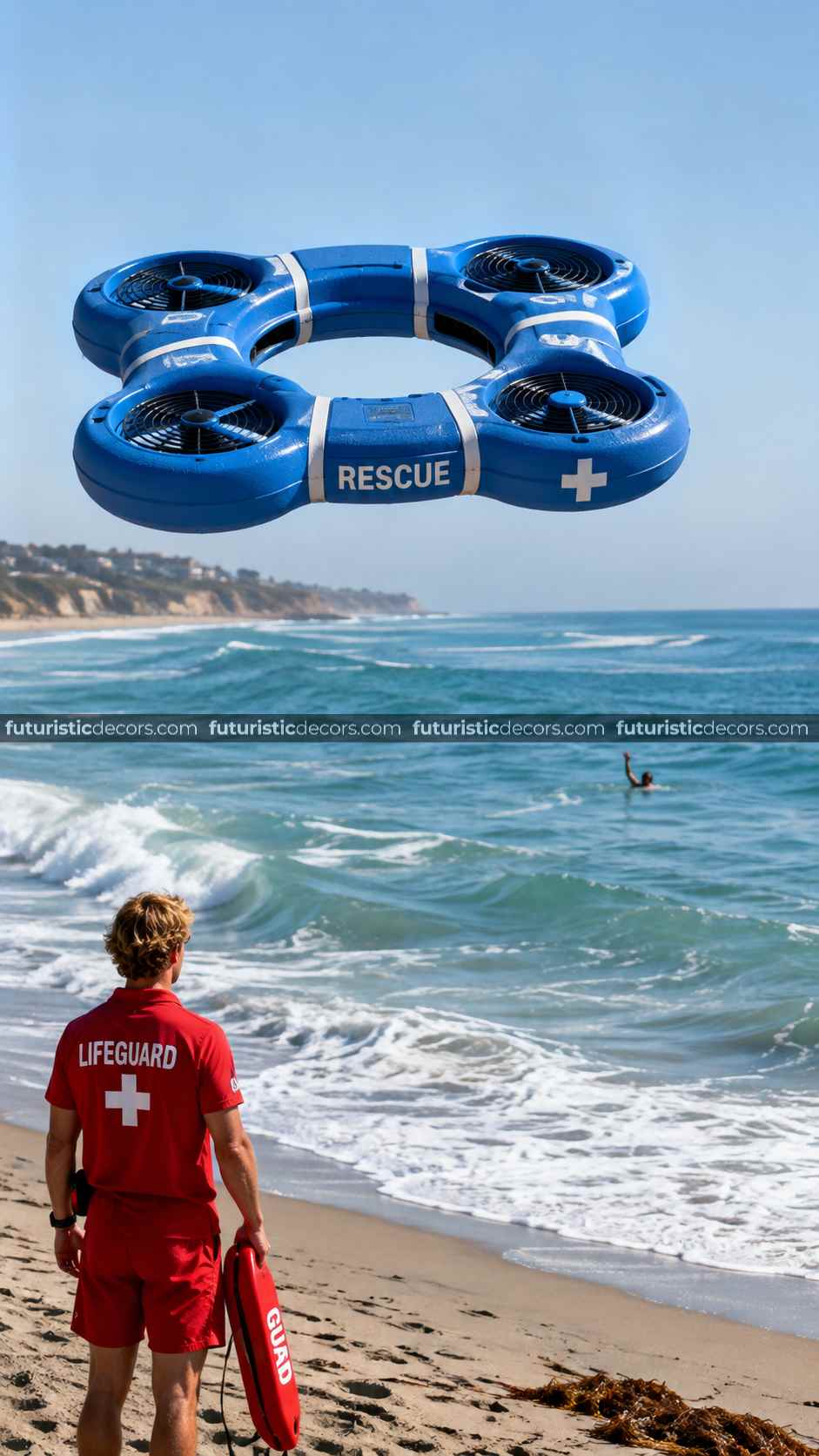
A Life Preserver Drone is a specialized unmanned aerial vehicle designed as a hybrid of a traditional life ring (or lifebuoy) and a multi-rotor drone. It flies rapidly to a person in distress in the water, lands or settles on the surface, and provides immediate flotation support until human rescuers arrive. In 2026, these devices have moved from experimental prototypes to practical tools used by lifeguard services, coast guards, and beach safety teams worldwide.
This buying guide covers everything you need to evaluate a Life Preserver Drone in 2026: core capabilities, critical specifications, practical considerations, and what separates capable units from under-engineered ones. The goal is clear decision-making for lifeguard stations, private beach operators, emergency services, or organizations responsible for water safety.
What Exactly Is a Life Preserver Drone?
A Life Preserver Drone is not a conventional camera drone that drops a separate flotation device. Instead, the entire airframe serves as the flotation aid. The buoyant body (often made of high-strength EPP foam or similar materials) provides the lift in water, while integrated motors and propellers allow controlled flight. Once on the surface, motors shut down or idle safely, and the victim can hold onto the ring.
Key advantages include:
- Rapid deployment over long distances
- Ability to operate in conditions too dangerous for immediate human entry
- Dual function as both transport and flotation device
- Real-time visual feedback via onboard cameras
Popular examples in the market include designs similar to the TY-3R series and various Chinese and specialized rescue manufacturers offering IP68-rated units with buoyancy sufficient for one or two adults. Some systems use a standard enterprise drone (such as certain Matrice platforms) to drop inflatable tubes, but true integrated Life Preserver Drone models keep the flotation and flight systems in one package.
Why Invest in a Life Preserver Drone in 2026?
Response time is the primary reason. Studies and field reports show drone delivery of flotation can reduce mean time to reach a victim by roughly 30–40% compared with traditional methods in certain scenarios, with more consistent results. In rip currents, strong waves, or cold water, those minutes matter.
Additional benefits:
- Reduced risk to human rescuers
- Ability to cover large beach sections or multiple simultaneous incidents
- Visual and (in advanced models) thermal observation of the victim
- Public confidence and potential liability reduction for operators of high-traffic beaches
Costs have declined relative to early units priced near $12,000, though professional-grade systems remain a significant investment. Declining hardware prices and growing market interest (smart lifeguard drone segments projected to expand substantially through the early 2030s) make 2026 a practical year to evaluate options.
Key Features to Evaluate in a Life Preserver Drone
When comparing models, focus on these performance and safety attributes.
Buoyancy and Flotation Performance
The core purpose is keeping a person afloat. Look for:
- Buoyancy rating of at least 150–200 N (or higher for two adults)
- Stable ring or closed-body design that prevents slipping
- Positive buoyancy even if electronics fail
- Ability to support the weight of one or two adults without submerging the grip areas
A Life Preserver Drone that cannot reliably float its intended load is useless. Test claims against independent data or certifications where available.
Flight Time and Range
Most current units offer 10–15 minutes of flight time. This is sufficient for short-to-medium beach deployments but limits longer-range coastal use. Prioritize:
- Real-world flight time with payload (the buoyancy body itself is the “payload”)
- Communication range of at least 1–1.5 km
- Return-to-home and failsafe behaviors if signal is lost
Longer endurance and greater range remain areas of active improvement in 2026 models.
Waterproofing and Environmental Resistance
Expect IP68 or equivalent ratings. The unit must survive:
- Full immersion for short periods
- Salt spray and wave action
- Wind resistance of at least Level 5–6
- Temperature extremes common at coastal sites
Propeller guards or ducted designs are essential to protect both the motors and the victim’s hands.
Propulsion and Handling
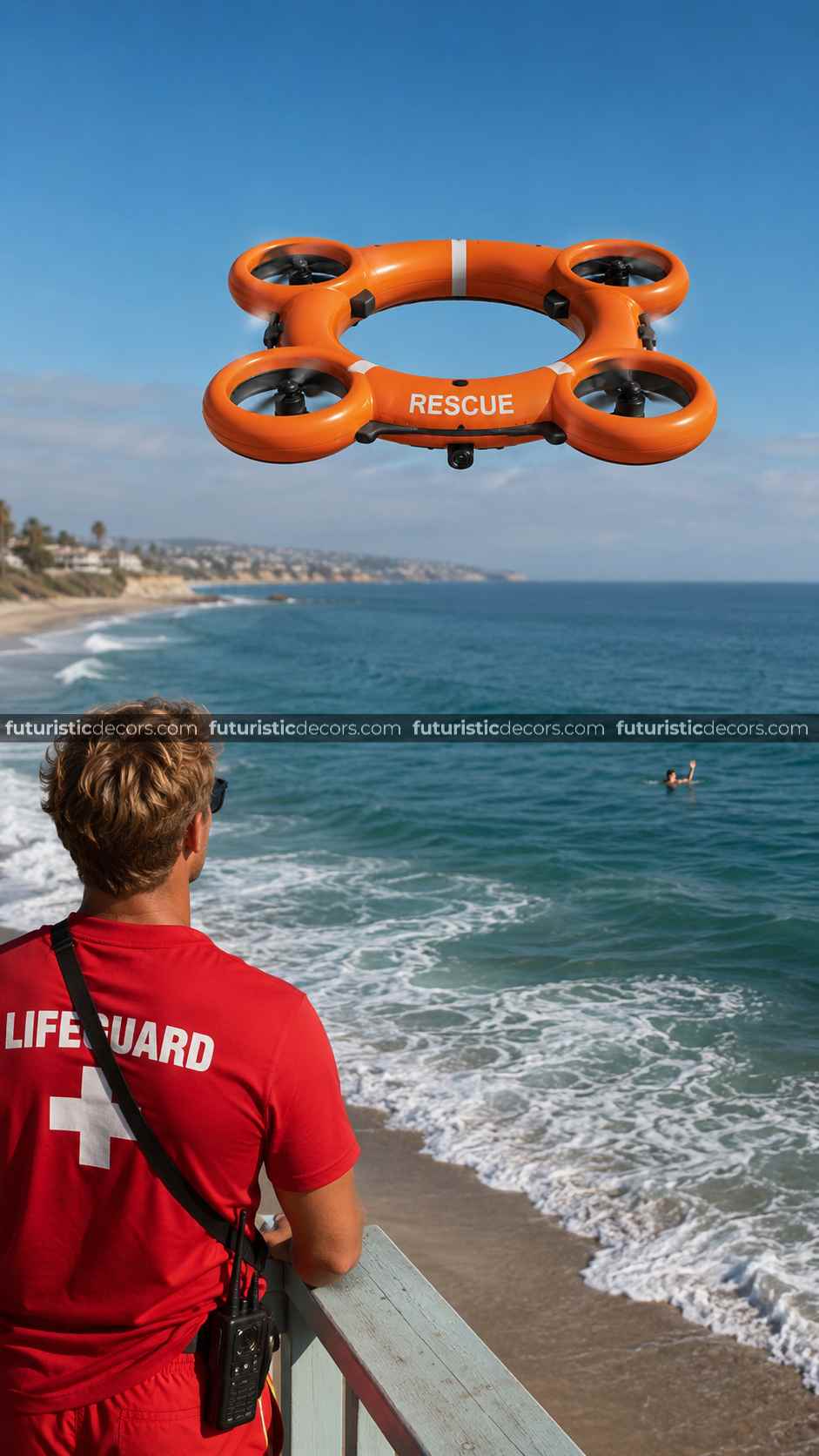
Four ducted propellers arranged around the ring is the common layout. Evaluate:
- Maximum speed (often 13–20 m/s)
- Hover stability and precision
- Ability to take off and land on water surfaces
- Noise levels (lower is better for communication with the victim)
A Life Preserver Drone should remain controllable in typical beach wind and wave conditions.
Cameras, Sensors, and Situational Awareness
Most units include at least one camera (often 720p or higher) with a controllable tilt. Advanced options add:
- Thermal or infrared imaging for low-light or night operations
- Live video transmission to the operator
- GPS positioning and beacon functions
- Optional loudspeakers for verbal instructions
These features help operators assess the victim’s condition and coordinate with ground teams.
Safety Systems
Critical elements include:
- Propeller mesh or ducts to prevent injury
- Automatic motor cutoff on water landing
- One-click takeoff, return, and hover modes
- Redundant communication or autonomous return
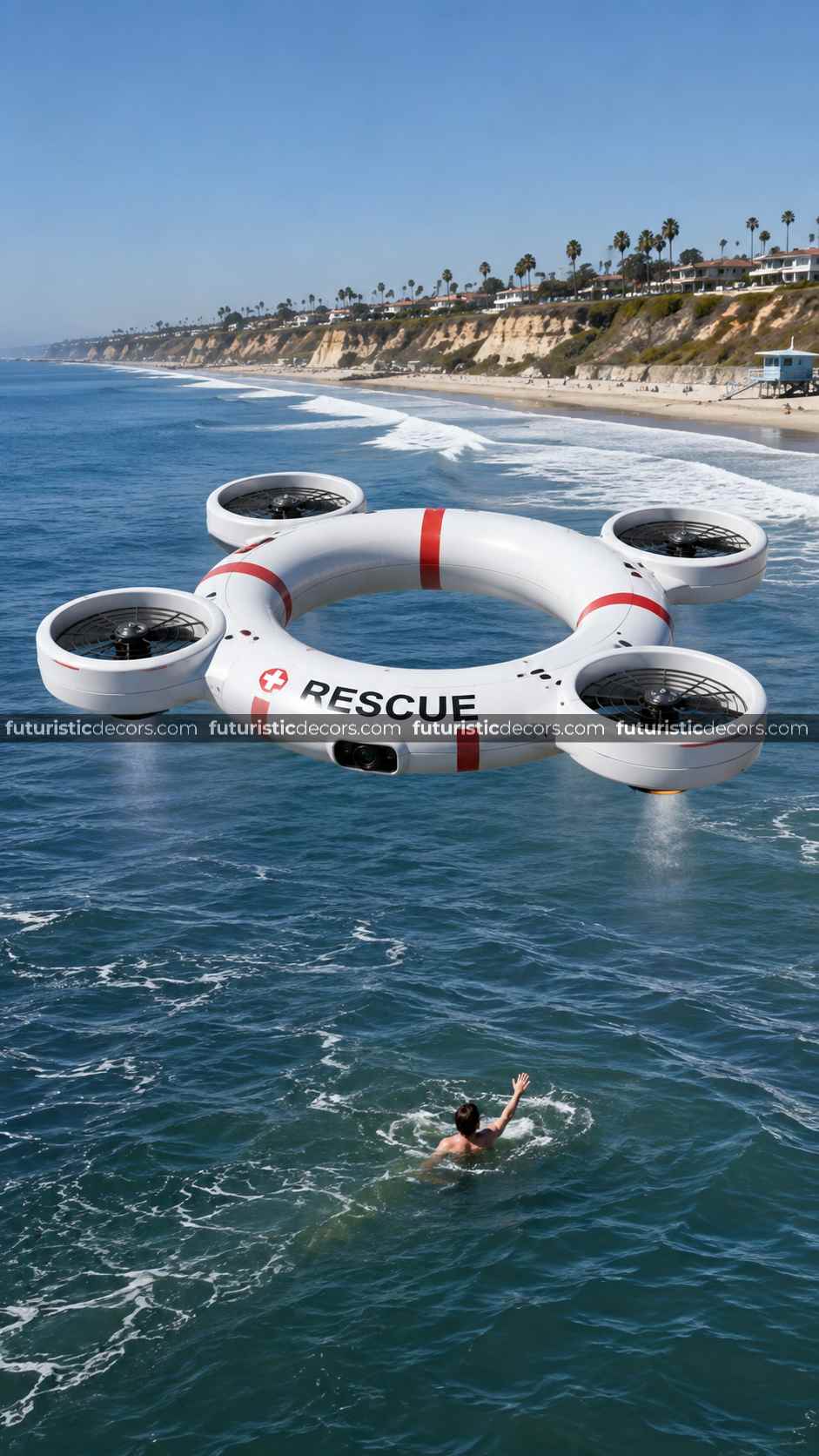
- High-visibility coloring (orange, white with red accents, blue, or black with clear “RESCUE” markings)
A well-designed Life Preserver Drone prioritizes victim and operator safety equally.
Explore more options like this: Click here
Technical Specifications Checklist
Use this list when reviewing manufacturer data sheets:
- Weight: typically under 5–10 kg for integrated designs
- Dimensions: roughly 0.9–1.2 m across for ring-style units
- Battery: lithium-ion packs with clear charge and cycle life data
- Control: dedicated remote with screen, often with 1–1.5 km range
- Materials: impact-resistant, UV-stable foam or composite
- Certifications: relevant aviation, waterproofing, and buoyancy standards
Always request real-world test data rather than relying solely on marketing claims.
Types of Life Preserver Drone Systems Available in 2026
Three main approaches exist:
- Fully integrated flying lifebuoy: The ring itself flies. Examples include the TY-3R-style and JX-6A-type designs. These offer the simplest deployment: fly to the victim and land.
- Enterprise drone + droppable flotation: A heavier multi-rotor carries and releases an inflatable tube or rescue pod. This approach leverages mature platforms and can add thermal cameras or speakers more easily, but requires precise drop accuracy.
- Hybrid or amphibious designs: Units that can transition between flight and surface movement or offer secondary takeoff from water.
For most beach lifeguard applications, an integrated Life Preserver Drone provides the fastest and most intuitive response.
Operational Considerations Before Purchase
Buying the hardware is only part of the decision.
Training and Certification
Operators need proper drone licensing (local aviation authority rules apply) plus water-rescue specific training. Practice deployments under realistic conditions.
Maintenance and Logistics
Saltwater environments are harsh. Factor in:
- Regular rinsing and inspection
- Spare batteries and propellers
- Storage that protects against UV and temperature extremes
- Turnaround time for repairs
Regulatory Compliance
Flying over people and water carries restrictions. Confirm local rules for operations near beaches, beyond visual line of sight (if applicable), and payload release. Some jurisdictions treat these as emergency exemptions; others require specific approvals.
Integration with Existing Teams
A Life Preserver Drone works best when paired with traditional lifeguard response. Define clear protocols: who launches, who communicates with the victim, and how the device is recovered after use.
Cost of Ownership
Initial price ranges from several thousand dollars for basic units to well over $10,000 for fully equipped professional systems. Add training, spare parts, insurance, and potential software subscriptions. Calculate cost per potential rescue against the value of lives saved and reduced liability exposure.
What to Look for in Build Quality and Reliability
Examine:
- Seam integrity and material density of the buoyant body
- Quality of motor mounts and vibration isolation
- Waterproof sealing of electronics and battery compartments
- Clarity and durability of “RESCUE” markings and high-visibility colors
- Availability of manufacturer support and spare parts in your region
A Life Preserver Drone that fails after a few saltwater exposures is a false economy. Prefer manufacturers with proven field deployments and transparent testing data.
Practical Deployment Scenarios
Beach and Surf Zones: Rip currents and shore breaks are primary use cases. Rapid flight over breaking waves delivers flotation before a swimmer tires.
Lakes, Rivers, and Reservoirs: Calmer water still benefits from speed, especially in large or remote bodies of water.
Night or Low-Visibility Operations: Thermal-equipped models extend usefulness beyond daylight hours.
Multi-Victim or Large-Area Coverage: Multiple units or longer-range systems allow parallel response.
In all cases, the Life Preserver Drone buys time. It does not replace the need for trained human rescuers and proper medical follow-up.
Common Pitfalls to Avoid
- Overlooking real-world flight time versus claimed numbers
- Choosing insufficient buoyancy for the expected victim size/weight
- Ignoring propeller protection
- Underestimating maintenance needs in marine environments
- Failing to establish clear operational protocols and training
- Buying solely on price without verifying support and parts availability
A cheap Life Preserver Drone that cannot be relied upon in an emergency is worse than none at all.
Emerging Trends in 2026 and Beyond
Expect continued improvements in:
- Battery energy density and flight endurance
- Autonomous or semi-autonomous navigation toward detected persons
- Better thermal and AI-assisted victim detection
- Lower costs and broader availability
- Integration with broader smart-beach monitoring systems
Market projections for smart lifeguard drone technology show strong growth, driven by both public safety mandates and private operators seeking better risk management.
Find and buy similar products: Click here
Conclusion
A well-chosen Life Preserver Drone can meaningfully improve response times and reduce risk in water emergencies. In 2026 the technology is mature enough for practical deployment yet still evolving quickly. Focus on proven buoyancy, adequate flight performance, robust waterproofing, clear safety features, and reliable manufacturer support.
By carefully evaluating the factors outlined in this guide—buoyancy, endurance, environmental resistance, sensors, safety systems, and total cost of ownership—you can select a Life Preserver Drone that delivers real operational value. The right unit will serve as a fast, reliable first line of flotation support, giving both victims and human rescuers a better chance of a successful outcome.
Prioritize function and reliability over novelty. A Life Preserver Drone that performs consistently when seconds count is the one worth acquiring.