
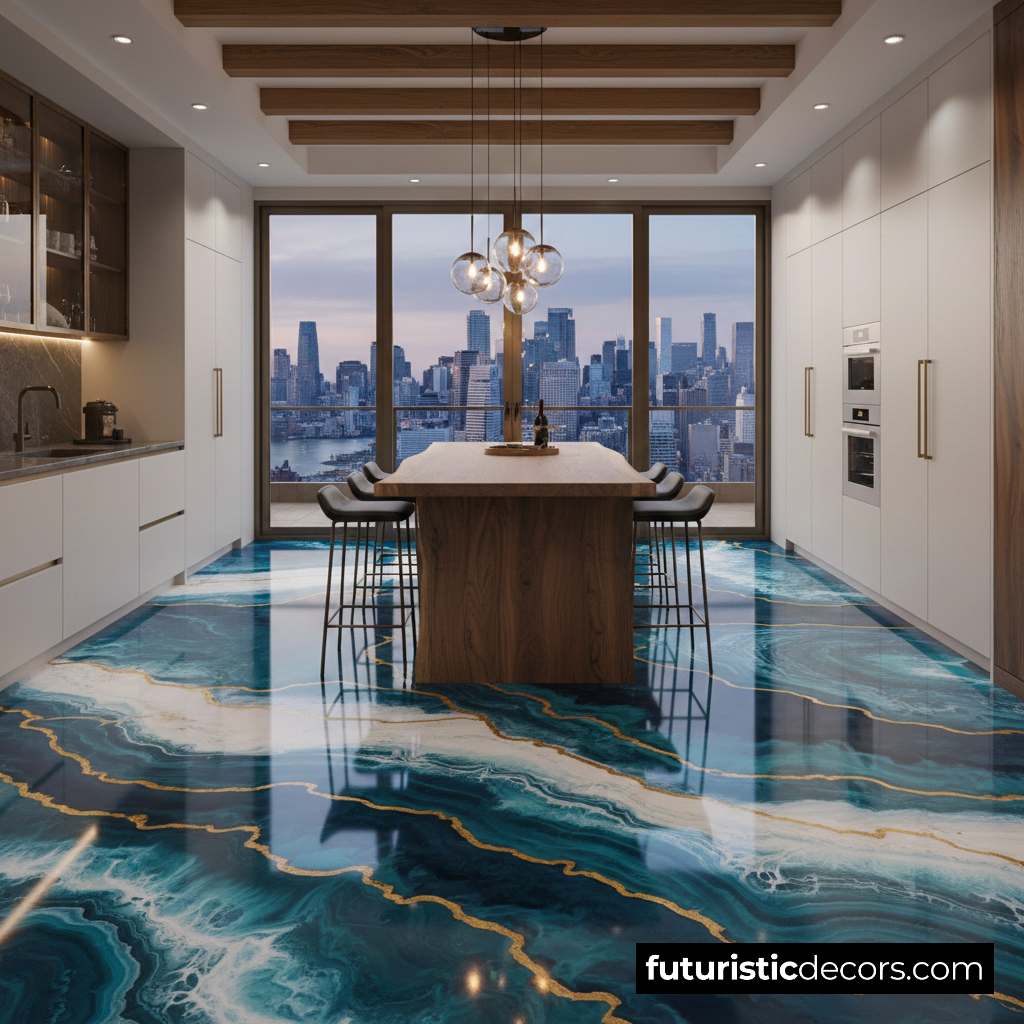
In the world of modern interior design, one element is redefining how we view the connection between art and architecture — Epoxy Agate Flooring. It’s more than just a surface to walk on; it’s a masterpiece underfoot, merging gemstone-inspired beauty with the durability of advanced epoxy technology. If you’re seeking to elevate your home or commercial space with an elegant yet striking design, this flooring concept is the epitome of sophistication and innovation.
The Captivating Essence of Epoxy Agate Flooring
Epoxy Agate Flooring takes inspiration from the mesmerizing patterns of natural agate stone — a gemstone celebrated for its vibrant color layers, intricate veining, and glossy finish. Through a meticulous blending of colored pigments, resins, and metallic powders, artists and craftsmen recreate the gemstone’s dynamic visual flow across a floor surface.
The result is a floor that looks like polished crystal — shimmering blues, greens, golds, and whites dance in fluid motion beneath your feet. Each installation becomes a one-of-a-kind artwork that transforms ordinary interiors into luxurious spaces of expression.
Whether you envision it for a high-rise penthouse kitchen, a grand hotel lobby, or a serene riverside villa, epoxy agate floor adapts seamlessly to different architectural styles. It’s a union of art, color, and strength — qualities rarely found together in a single material.
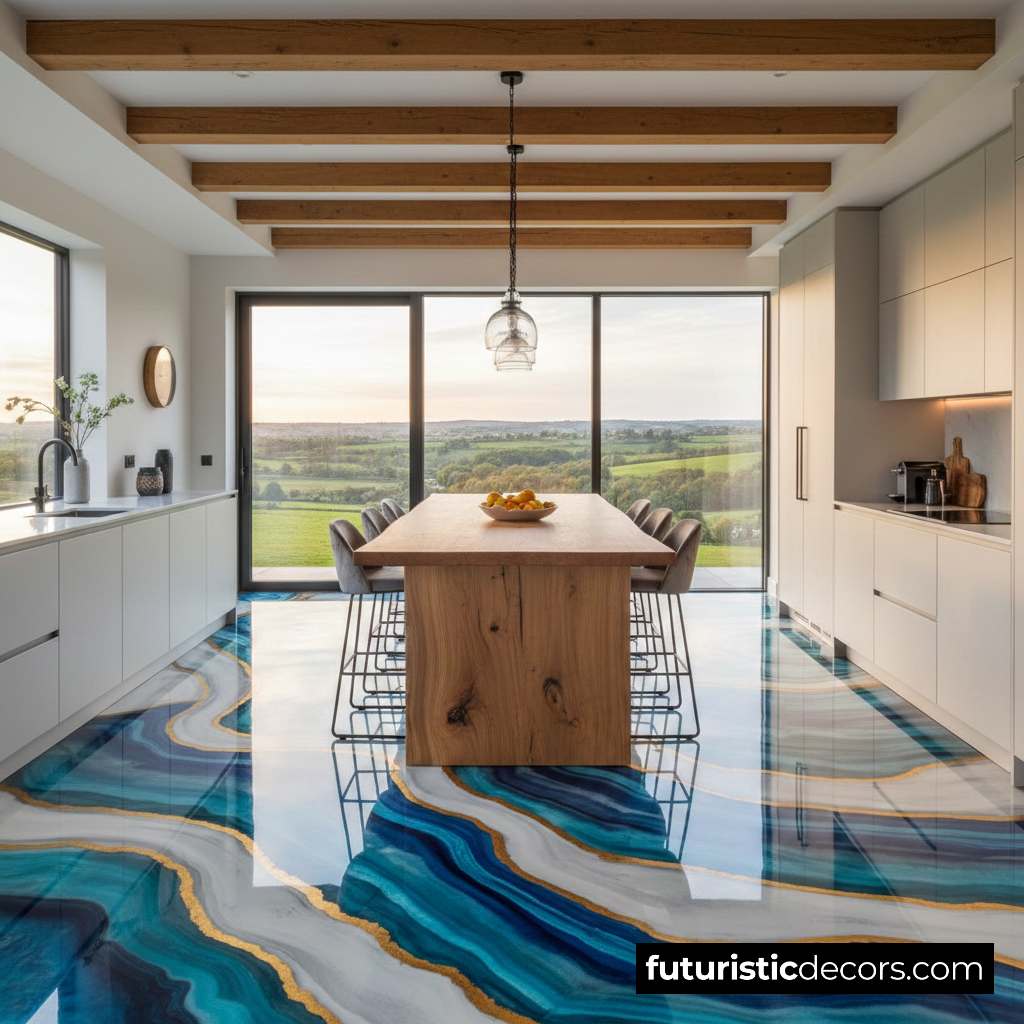
Why Homeowners and Designers Love Epoxy Agate Flooring?
The growing popularity of Epoxy Agate Flooring stems from its perfect balance between visual impact and functional resilience. Here’s why it’s winning hearts across the design industry:
Stunning Gemstone-Like Appearance
The main attraction of epoxy agate floor is its luxurious, high-gloss aesthetic that resembles natural agate. Each swirl and hue variation mimics the crystalline depths of semi-precious stones — especially in tones like turquoise, emerald, sapphire, and smoky quartz.
Designers can even customize the pigments to match furniture, wall art, or the surrounding landscape. Imagine walking into a room where the floor mirrors a tropical ocean, or where gold veins catch the morning sunlight — that’s the magic this flooring brings.
Exceptional Durability
While it may look delicate, Epoxy Agate Flooring is incredibly strong. Epoxy resin, the base component, is known for its resistance to scratches, moisture, and impact. Once cured, it forms a seamless surface that can handle heavy foot traffic and resist daily wear — perfect for modern kitchens, offices, and showrooms.
Unlike marble or granite, it doesn’t chip or crack easily. Its non-porous nature also makes it immune to staining — even from wine, oil, or chemicals.
Endless Customization Options
Every installation of epoxy agate floor is a piece of art. Homeowners can choose from countless pigment combinations — from deep oceanic blues to warm desert ambers. Metallic powders add shimmer, while translucent resin layers create depth similar to gemstones.
Designers often incorporate LED lighting beneath the surface to enhance its 3D glow, making the space come alive at night.
Low Maintenance Luxury
A quick mop and a mild cleaner are all it takes to keep Epoxy Agate Flooring shining like new. The glossy finish repels dust and prevents allergens from settling, making it ideal for families with children or pets.
There’s no need for constant polishing, sealing, or waxing — unlike traditional stone flooring. Its resilience ensures that beauty and practicality coexist effortlessly.
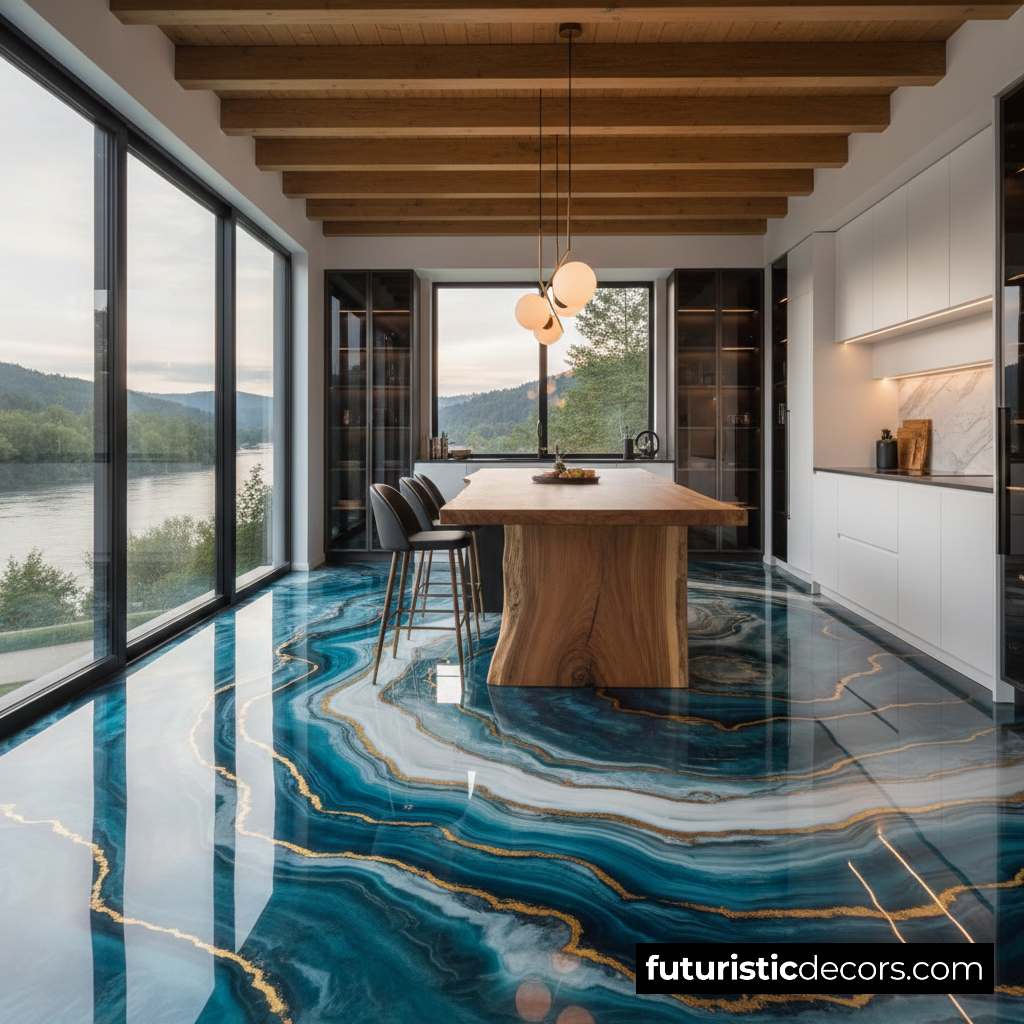
How Epoxy Agate Flooring is Made: The Process Behind the Perfection
The process of crafting epoxy agate floor is both technical and artistic. It requires precision, patience, and creativity. Let’s look at how professionals achieve that flawless gemstone finish:
Step 1: Surface Preparation
The existing floor — typically concrete — must be cleaned, leveled, and primed. Any cracks or imperfections are repaired to ensure the epoxy adheres evenly.
Step 2: Base Layer Application
A primer coat is applied to create a strong bond. This ensures the resin layers stick properly and enhances the floor’s longevity.
Step 3: Pigment and Resin Blending
Designers mix various pigments, metallic flakes, and dyes into the epoxy resin. The blend is then poured and spread across the surface in fluid, artistic motions, mimicking agate’s natural bands and veins.
Step 4: Design Manipulation
This stage is where the true artistry shines. Using brushes, heat guns, or sponges, the installer manipulates colors to form natural, flowing transitions — emulating the mesmerizing look of gemstone slabs.
Step 5: Clear Topcoat Sealing
Once the design cures, a transparent topcoat is applied for added protection and depth. The result is a mirror-like finish that captures light beautifully and enhances every hue and detail beneath it.
Refer to buy similar products: Click here
Design Inspirations and Ideas for Epoxy Agate Flooring
From minimalist kitchens to luxurious living rooms, Epoxy Agate Flooring suits a wide range of styles. Here are a few design inspirations to spark your imagination:
1. Ocean-Inspired Kitchens
Blue and teal epoxy floors evoke a sense of calmness and sophistication. Paired with wood or marble countertops, they bring a natural balance between water and earth tones — ideal for coastal homes or apartments with panoramic city views.
2. Luxury Living Rooms
In open-plan living spaces, deep blue or emerald green Epoxy Agate Flooring becomes the visual centerpiece. Complement it with gold accents, glass furniture, and modern lighting for a contemporary yet regal ambiance.
3. Spa-Like Bathrooms
Using soft aqua and white tones with gold veining, epoxy agate floor transforms bathrooms into tranquil sanctuaries. Add a freestanding tub and soft LED lighting, and you’ll have your own gemstone spa retreat.
4. Artistic Office Spaces
Creative studios or modern offices can use bold patterns to express innovation. With Epoxy Agate Flooring, floors double as art pieces — inspiring productivity and imagination every step of the way.
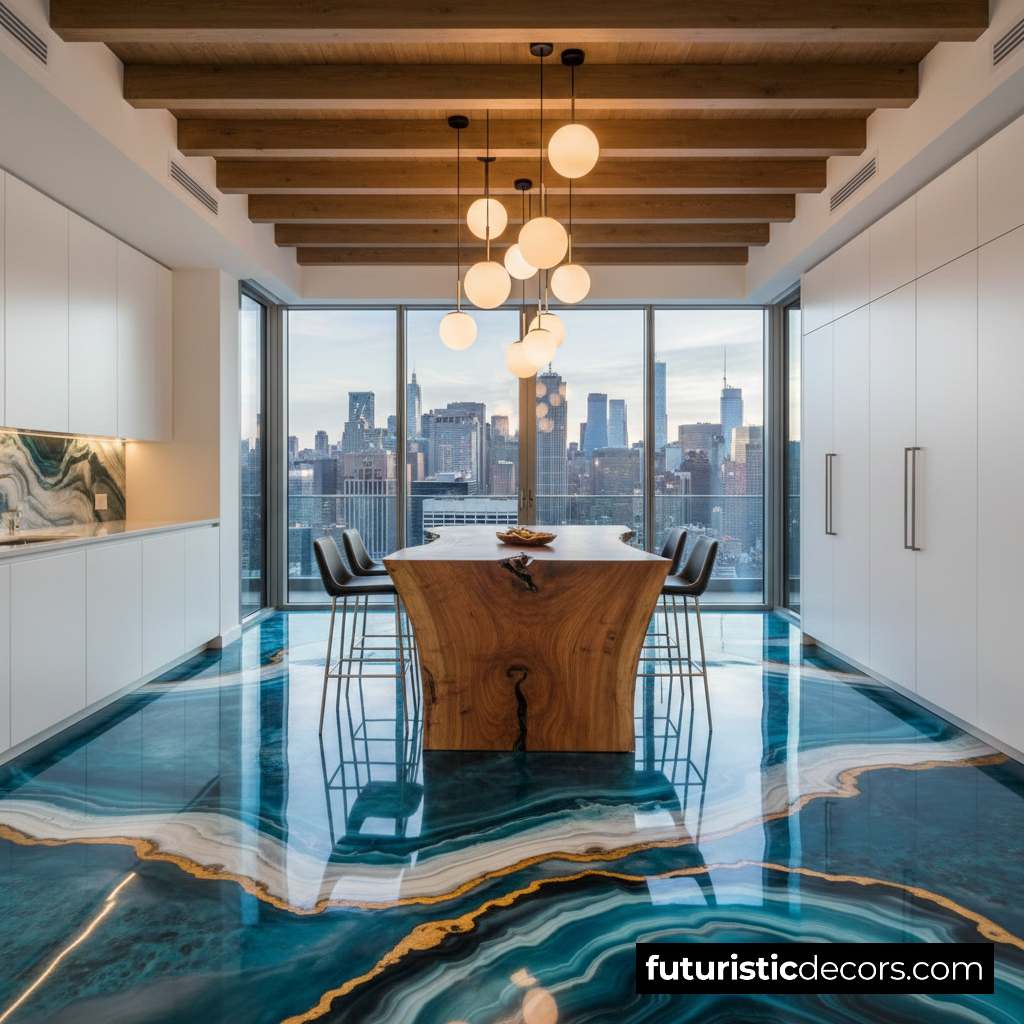
Pairing Furniture and Décor with Epoxy Agate Flooring
Because Epoxy Agate Flooring is visually rich, it pairs best with minimalist or natural materials that balance its vibrancy:
- Wood Elements: Light or medium-tone wood (like oak or walnut) enhances warmth and brings organic harmony to the room.
- Metal Accents: Gold, brass, or matte black hardware contrast beautifully with the glossy gemstone surface.
- Neutral Walls: Whites, creams, and soft grays keep attention on the floor while maintaining a calm atmosphere.
- Statement Lighting: Pendant lights, chandeliers, or modern glass fixtures reflect off the epoxy, amplifying its luminous beauty.
The goal is to let the floor remain the star of the room — the foundation of luxury and art.
Advantages Over Traditional Flooring
When compared to marble, tiles, or hardwood, epoxy agate floor offers unique benefits that set it apart:
| Feature | Epoxy Agate Flooring | Traditional Flooring |
|---|---|---|
| Durability | Highly resistant to impact and stains | Susceptible to cracks and wear |
| Customization | Infinite design and color possibilities | Limited to natural variation |
| Maintenance | Easy cleaning, no sealing required | Regular maintenance and polishing needed |
| Seamlessness | Smooth and joint-free | Grout lines or seams visible |
| Cost Efficiency | Moderate installation cost | High cost for natural stone |
It’s clear that Epoxy Agate Flooring combines visual richness with long-term practicality, making it a future-forward choice for design lovers.
Cost and Installation Overview (2025 Guide)
The price of epoxy agate floor can vary depending on factors like design complexity, material quality, and surface size. Below is a general guide for 2025:
- Basic epoxy floor (solid color): $4 – $6 per sq. ft.
- Metallic epoxy (multi-color effects): $8 – $12 per sq. ft.
- Epoxy Agate Flooring (custom gemstone designs): $15 – $30 per sq. ft.
- LED embedded or 3D finishes: $35 – $50 per sq. ft.
Professional installation typically includes surface prep, resin layering, curing, and sealing. For smaller rooms (like kitchens or bathrooms), installation can take 3–5 days. Larger spaces or intricate designs may require a week or more.
While the initial cost is higher than standard tile, the longevity and artistic impact of Epoxy Agate Flooring make it a wise investment that increases both beauty and property value.
Maintenance Tips for Long-Lasting Shine
Keeping epoxy agate floor pristine is simple. Follow these care tips to ensure it retains its glossy finish for years:
- Sweep and Mop Regularly – Remove dust with a microfiber mop or vacuum to prevent micro-scratches.
- Use Gentle Cleaners – Avoid harsh chemicals. A mix of warm water and mild soap works best.
- Avoid Dragging Furniture – Use felt pads under chair or table legs.
- Polish Occasionally – A soft buffing every few months enhances shine and depth.
- Protect from UV Rays – In areas with strong sunlight, use rugs or UV coatings to prevent fading.
With minimal effort, the surface remains as stunning as the day it was installed.
Where Epoxy Agate Flooring Works Best
Because of its durability and elegance, epoxy agate floor fits seamlessly in various environments:
- Residential: Living rooms, kitchens, bathrooms, and bedrooms
- Commercial: Hotels, spas, restaurants, and art galleries
- Corporate: Offices, reception areas, and boardrooms
- Luxury Retail: Jewelry stores and designer showrooms
Its resistance to moisture makes it especially ideal for coastal homes and humid climates.
Eco-Friendly Aspects
Sustainability is an emerging priority in interior design. Fortunately, Epoxy Agate Flooring can align with eco-conscious goals:
- Many epoxy resins are now low-VOC (volatile organic compound), meaning they release fewer toxins.
- The long lifespan reduces waste, unlike tiles or carpet that require frequent replacement.
- Its reflective surface increases ambient light, reducing energy consumption from artificial lighting.
When combined with responsible installation practices, it becomes an environmentally considerate flooring solution.
Frequently Asked Questions (FAQs)
1. Is Epoxy Agate Flooring slippery?
No. While it has a high-gloss look, anti-slip additives can be mixed into the top layer to enhance traction without reducing shine.
2. How long does Epoxy Agate Flooring last?
With proper care, it can last 20–30 years without losing its appearance, far outlasting most conventional flooring.
3. Can it be installed over tiles or wood floors?
Yes. As long as the existing floor is stable, it can be overlaid after proper surface preparation.
4. Does the design fade over time?
High-quality UV-resistant epoxy ensures that colors remain vivid and won’t yellow or dull over the years.
5. Is it safe for homes with pets or children?
Absolutely. It’s non-toxic once cured, seamless, and easy to clean — perfect for family environments.
Refer to similar product models: Click here
Final Thoughts: “When Art Meets Architecture”
Epoxy Agate Flooring is not just a design choice — it’s a statement of taste, creativity, and forward-thinking innovation. Each surface reflects the natural allure of gemstones while providing the strength and functionality needed for modern living.
For homeowners and designers who believe floors should do more than just support furniture — who want them to tell a story, radiate beauty, and elevate emotion — epoxy agate floor is the perfect answer.
From the glossy river-like swirls beneath your feet to the timeless resilience they offer, this flooring captures the ultimate harmony between art, color, and strength. It’s where nature’s patterns meet human imagination — and the result is breathtaking.